
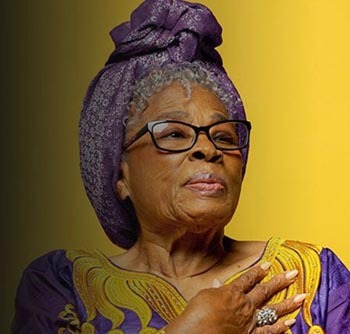
In 1926, Opal was born in Marshall, Texas. She was the oldest of three children, who moved to Fort Worth, Texas, when Opal was ten. Two years later, a mob of 500 white rioters burned down her home, angry that the family for moving into a predominantly black neighborhood.
Of the incident, Lee said: “The people didn’t want us. They started gathering. The paper said the police couldn’t control the mob. My father came with a gun, and police told them if he busted a cap, they’d let the mob have us. They started throwing things at the house, and when they left, they took out the furniture and burned it and burned the house.”
The fire took place on June 19, 1939 — Juneteenth — which made even young Opal to realize that Juneteenth was not just a festival. It had meaning, and it had meaning to the white folks who burned her house just as it had meaning to her family and black folks like her.
Opal Lee spent her adult life as an educator and a home school counselor, and when she retired in 1976 she became active in a variety of community work. Among them was starting a tradition of walking 2.5 miles each Juneteenth, to represent the two-and-a-half years it took for the Emancipation Proclamation to reach the state of Texas.
Beginning in September 2016, the then 89 year-old headed a movement to make Juneteenth a national holiday. She started an online petition she hoped would gather 100,000 signatures; it ended up with over 1.6 million. She traveled the country participating in a series of 2.5 mile walks that were symbolically intended to represent the journey from Texas to Washington, D.C. And ultimately, she was present on June 17, 2021, when President Biden signed the bill into law that made Juneteenth a national holiday.
On his inauguration day, January 20, 2025, President Trump issued Executive Order 14151, which was interpreted by his administration to eliminate planning and observation of a number of cultural remembrance events, including Juneteenth.
At 99 years old, I don’t think that will stop Opal Lee from celebrating today. The white supremacist slavers who retreated to Texas to try to hold onto their power could not stop Emancipation from reaching them in the end. That seems a fitting metaphor for our present moment. The freedom that Juneteenth celebrates and symbolizes is inescapable.
Indeed, Love conquers all.
Peace+